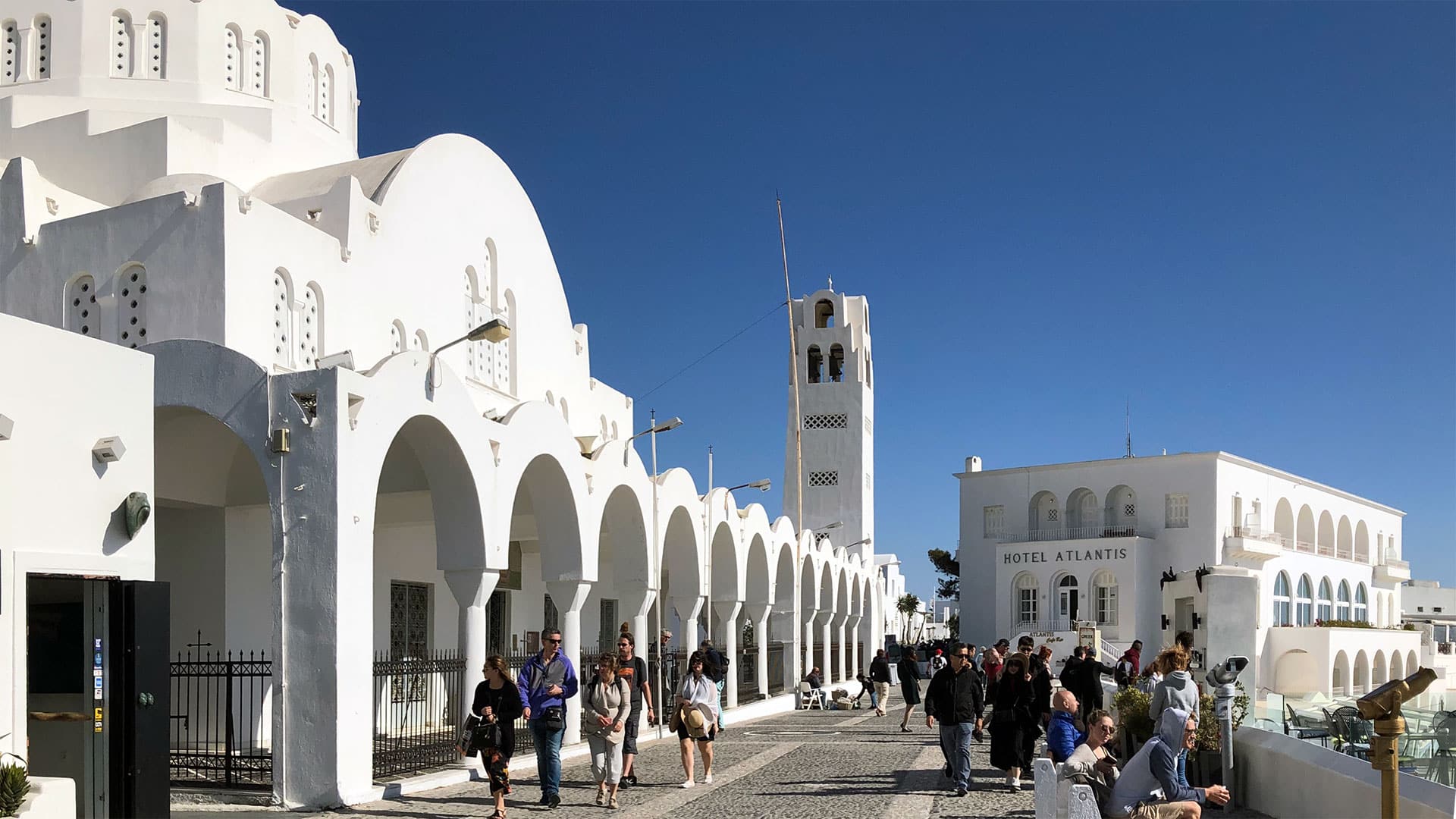
This week I'm in Greece, watching fighter jets fly overhead. Many people say this has nothing to do with us, but I remember many people said the same about Ukraine in February 2022. The next day, missiles slammed into central Kyiv. Your assets, your identity, your children's education — all bet on the same jurisdiction? That's not allocation, it's a geographic gamble.
When the Once-Safest Place Becomes the Most Dangerous — Where Is Your Plan B?
In late February 2026, the Middle East plunged into full-scale war. The Burj Al Arab caught fire, an explosion struck Palm Jumeirah, and Dubai Airport saw mass flight suspensions. That skyline, once a symbol of prosperity and safety, turned overnight from an influencer hotspot into a crisis scene. The Strait of Hormuz was blockaded. It happened in the Middle East, but next time, it could happen anywhere you thought was safe.
This war blew up not only buildings, but people's confidence in "safety." Over the past two decades, globalization gave many people an illusion: capital can flow freely, flights can take off anytime, identity questions can be figured out later. But reality has reminded me again and again —The Rules Change Far Faster Than You Can ReactThe
What I really want to talk about is not any one country, nor any one program. I want to talk about something more fundamental:Most people have spent their lives on asset allocation, yet have never truly done identity allocation.Buying insurance, building offshore structures, diversifying currencies, allocating real estate — these are all asset-level moves. But when the rules suddenly change, borders suddenly close, and your original passport suddenly becomes useless, what is it that actually keeps you and your family going?
The answer is not money — it is identity. In this era,identity is infrastructure. Next, I'll break down the four most common and most dangerous illusions of safety, and then show you how this identity infrastructure should be built.
1. Four Cognitive Illusions: Your Blind Spot Is Not Money, It's Identity
Illusion One: More Cash Means More Safety
After the 2022 Russia-Ukraine conflict, individuals holding Russian passports — even with vast sums deposited in Swiss banks — had their accounts frozen all the same. The key issue was never the amount, butlegal jurisdictionIn the global financial system, the legal risk attached to your assets is bound to your nationality and identity structure, not to the numbers in your account. Many people think that holding more cash or opening a few more offshore accounts will add a sense of security. But when institutional risk rises and financial scrutiny tightens,The money is still there, but you may not be able to spend itThe
Using tactical cleverness to fight a strategic-level trend is often the loser's greatest illusion.
What you truly need is not more cash, buta second legal identity. When your original nationality is flagged and your bank account is frozen, what you need is a passport that lets you re-enter the financial system — and that is one of the most central values of a second citizenship:a financial channelThe
Illusion Two: Wait Until the Situation Becomes Clear Before Acting
Having covered money, let's talk about timing. Many people hold another mindset: let's wait and see, hold off, and decide once the situation stabilizes. But the market won't wait for you.
In the Caribbean identity market, I've seen a repeatedly verified pattern: after every geopolitical crisis, citizenship-by-investment applications surge by an average of 400% to 600% within 90 days. Demand spikes, quotas are exhausted, approval cycles lengthen, and thresholds rise accordingly.By the time the situation is clear, the price is already different. Identity planning is not about waiting for the answer to be revealed before placing your bet — it's about positioning your pieces before the change arrives.
Illusion Three: Having Residency Means You're Safe
If the first two illusions still leave room for correction, the third carries the highest cost — because it is the most concealed.
The most common scenario: someone has lived abroad for six or seven years, with work, their children's education, and daily life all established locally. Yet when their original passport expires, they suddenly discover —renewing the passport requires returning to the home country in person. If, by that time, the situation in the home country has changed — political risk rising, entry-exit policies tightening — even the most basic document renewal can become a real-world barrier.
Once a passport lapses, an entire overseas life can collapse like dominoes:
Residency renewal blocked — you may lose even your legal right to remain locally
Bank account frozen — without a valid ID document, the bank simply restricts operations
Cross-border travel restricted — you can't go anywhere
Loss of work eligibility
Children's schooling and medical procedures interrupted
You think you've left the risk behind, but your underlying identity is still firmly held by your original country.Residency is a middle layer, not the foundation.It can let you live elsewhere temporarily, but it won't necessarily let you truly break free from your original system's constraints at the critical moment. The truly stable foundation is a second citizenship.
Illusion Four: If Assets Can Move, People Can Move
If residency is unreliable, what about the mobility of assets? Many believe that if the money can go, the person can go. Reality is not so.
During the pandemic, many discovered that their funds could still move freely around the world, yet they themselves could not cross a border. It was not the assets that were trapped —what was trapped was identityAt the end of 2025, a sudden geopolitical friction caused Singapore's Changi Airport to close temporarily for 72 hours, stranding business travelers who relied on a single residency identity abroad and unable to return to handle urgent matters — once again proving that when systemic risk erupts, liquidity does not equal the right of passage.
When your nationality, residency, education, healthcare, and taxation are all bound to the same jurisdiction, what you possess is not stability but an extremely fragile concentration. True stability comes fromasset mobility plus identity mobility, and the core of identity mobility is a stable second citizenship.
2. A Second Citizenship: The Bedrock of the Entire Identity Infrastructure
Having talked about the fear, it's time to talk about the way out. The good news is, this problem has a solution — and the path is clearer than you might think.
All four cognitive illusions ultimately point to the same blind spot: most people spend their energy on asset optimization — diversifying investments, hedging currency, buying insurance — while overlooking the most fundamental variable.What determines your survival floor is not your asset structure, but your identity structure.
If I were to break down identity infrastructure, a second nationality is always the bottommost layer. What this layer solves is not where you live, but whether — when your original identity system fails, is restricted, or gets flagged — you still have another lawful identity that can keep operating.
Many people understand a second citizenship as travel convenience or a visa-free list. But in my view, it is first and foremost a survival tool for extreme situations — and its core value has three parts:
First, legal switching.When your original passport is flagged and your home country's system shows risk, you still have a completely independent legal identity — opening accounts, traveling, signing contracts, holding assets — all without relying on your original nationality. This is the most fundamental safety valve.
Second, a financial channel.If, because of your nationality, your bank account is frozen, your credit cards are suspended, or your cross-border transfers are blocked, a second nationality lets you reconnect to the financial system under a different legal framework. After 2022, large numbers of Russian citizens had their bank cards suspended, yet those holding a second nationality were almost entirely unaffected — they simply used another passport to open accounts, transact, and live normally.
Third, family protection.A passport that can't be renewed when it expires, exit restrictions that suddenly tighten, a child's education and medical procedures interrupted by document problems — these are not hypotheticals; they are things that have actually happened to countless families over the past few years. A second nationality gives your family an independent channel that requires no approval from your country of origin.
Caribbean Citizenship by Investment: The Most Mature Foundational Solution
Caribbean citizenship-by-investment (CBI) programs have operated for more than thirty years, making them the world's most mature and time-tested path to acquiring a second nationality. Take Dominica and St. Kitts: these programs are all over 30 years old and have to date provided identity security to more than twenty thousand families.
The current mainstream Caribbean CBI programs include:
High value for money, rigorous due diligence, a thoroughly complete second citizenship
The Strategic Value of a Caribbean Passport
A Caribbean passport is not as simple as “buying a cheap passport.” Its real value lies in:
Identity-switching capability:When your original passport is sanctioned, frozen, or travel-restricted, you have a completely independent legal identity that can keep operating.
Speed advantage:From application to approval, as fast as 3 months. By contrast, any residency-to-citizenship route takes 7–10 years. In a crisis window, time is everything.
Global mobility:Visa-free or visa-on-arrival access to 140–156 countries and territories, including key hubs such as the UK, the Schengen Area, Singapore, and Hong Kong.
Family coverage:The main applicant can include a spouse, children, parents, and even grandparents, solving the whole family's identity needs in a single application.
No residence requirement:No need to live locally, and no disruption to your existing life arrangements. A pure identity tool — clean and decisive.
The New Reality of 2026: Tightening Regulation and a Narrowing Window
I must point out that Caribbean CBI is going through the strictest regulatory cycle in its history. In 2026, St. Kitts became the first to abolish the pure-donation citizenship channel, and the Eastern Caribbean Citizenship by Investment Regulatory Authority is expected to begin formal operations mid-year. Over the past decade or so, the minimum threshold has risen from $100K to $200K, an increase of more than 100%.
This means two things:First, the programs' compliance and international reputation are improving— which is good news for holders;Second, the thresholds will only keep rising— every adjustment moves in only one direction.
I've handled a large number of cases, and there's one pattern with almost no exceptions:Those who apply during stable periods get the lowest cost, the shortest timeline, and the most options; those who rush in after a crisis pay double, queue for half a year, and may still be rejected.
I won't tell you the Caribbean passport is perfect. Its visa-free coverage is not as broad as an EU passport's, its living infrastructure is not as developed as that of developed nations, and the due diligence in some countries may introduce approval uncertainty. But on the dimension of "obtaining a fully independent legal identity in the shortest time and at the lowest threshold,"it is one of the most efficient solutions available todayThe
3. The Residency Layer: Greece's Commercial-to-Residential Route — A €250K Gateway to the EU
Citizenship alone is not enough; you also need a real place to land your life.A passport determines who you are; residency determines where you live.
With the nationality-layer foundation in place, the next thing to solve is the residency layer — where the children go to school, where the family settles, where retirement is arranged. If a second nationality is the bottom-layer safety net, then the residency layer is where the living system actually takes shape. Mature planning should view a second nationality and residency within the same structural diagram, rather than as an either/or choice.
Among all EU residency programs, Greece's Golden Visa commercial-to-residential route is currently the most cost-efficient option:
€250,000— the lowest investment amount of any EU Golden Visa program in 2026
Free movement across the 27 Schengen countries— one residence card unlocks the entire European continent
Three generations of immigrants— one application, three generations of the family together
Permanent residence → citizenship— after 7 years you can apply for permanent residence, and upon meeting the conditions apply forEuropean Union passport
Not Just Identity — Also an Asset
Another advantage of Greece's commercial-to-residential route is its asset-appreciation potential. Rental yields in central Athens run at about5.6%, among the highest of any major European capital. A €250K investment is not just buying a residence card — it's acquiring a tangible asset under the EU legal framework, with rental income and appreciation potential.Identity has a price, but good identity planning lets you hold the identity and collect rent at the same time.
Of course, risks exist too. Greece has repeatedly raised its Golden Visa thresholds — core areas (Athens, Thessaloniki) have risen to €500K, with €250K retained only on the commercial-to-residential conversion path, and the policy window could narrow at any time. Citizenship requires meeting Greek-language requirements and residency duration. The real estate market has cyclical fluctuations, and past performance does not represent future returns. All of these must be factored in at the very start of planning.
Identity-Structure Comparison: How to Choose Among the Four Options?
90-day passport + months-long residency in parallel
Identity independence
● Fully independent citizenship
✗ Dependent on renewal
△ Residency depends on the investment; independent after citizenship
● Doubly independent: passport + EU residency
Lifestyle value
✗ Lacks quality amenities
● Business-convenient, high cost
● European quality, international schools, healthcare
● Global mobility + European quality of life
Geopolitical risk
Low (under regulatory pressure)
△ Highly dependent on the Middle East situation
Low (dual EU + NATO framework)
● Lowest — diversified across two regions
A Caribbean passport solves the bottom layer, while the Greek Golden Visa solves the middle layer — the two are not substitutes but complements. For those who already hold a Caribbean passport, the Greek Golden Visa is the best option for completing the residency layer; for families relying on Dubai residency, the combination of a Caribbean passport plus a Greek Golden Visa means the nationality layer and the residency layer are in place at the same time.Only when both the foundation and the middle layer are in place can your identity structure truly withstand an extreme shock.
4. The Three-Layer Structure: Don't Gamble on Geography — Allocate It
Zoom out along the timeline, and every crisis repeats the same script:
1990Iraq invades Kuwait — bank accounts frozen, wealthy families unable to leave
2022The Russia-Ukraine conflict — seven million Ukrainian refugees in exile, nearly a million Russian citizens with deactivated bank cards and stalled passport renewals
2026Full-scale war in the Middle East — Dubai residents reliant on a single residency system find the exit already closed
In the systemic collapse of great-power rivalry, the bill is always paid byordinary people who hold only one passport. And in CRS Against the backdrop of CRS 2.0 and CARF (the Crypto-Asset Reporting Framework) coming into formal effect in 2026, crypto assets, digital currencies, and offshore trusts are all being brought into the automatic exchange mechanism — and the old approach of manufacturing security through information asymmetry and gray areas is rapidly losing its effectiveness.
This is why I view identity planning as a three-layer structure — and all three layers are indispensable:
Layer One: The Citizenship Layer (Foundation) — The Most Critical Link
Solves theidentity-switching capabilityWhen your original passport is flagged and your country of origin's system becomes risky, you still have another independent legal identity to live normally. Use Caribbean CBI to obtain a second legal identity in the shortest time — landing in 60 to 90 days. Without this layer, the residency layer and tax layer above it are castles in the air.If the foundation is unstable, no structure built on it will hold.
Layer Two: The Residency Layer (Middle Layer)
It solves the question of where individuals and families live long-term. Use Greece's commercial-to-residential path to establish a living anchor in the EU for €250K, with free movement across the 27 Schengen nations, while also gaining asset allocation. The residency layer keeps Plan B from staying on paper, giving it an executable landing point.
Layer Three: The Tax Layer (Top)
exist CRS In an environment where CRS 2.0 and CARF are continually strengthening, establishing a reasonable and compliant tax identity. What will truly matter in the future is not hiding, but building in advance a tax structure that is compliant, clear, and can withstand long-term scrutiny.Compliance is not a compromise — it is the highest level of risk management.
Identity structure, at its core, is just like buying insurance — you never want to use it, but when that day comes, having it versus not having it are two different worlds. And history is never merciful; every round of upheaval eliminates the unprepared.
After doing identity planning for so many years, I'm increasingly certain of one thing: what will truly be scarce in the future is not information, but structure. Whoever builds structure earlier can retain optionality when uncertainty truly arrives. By the time everyone starts fleeing, the most expensive thing is often not the airfare, nor the program threshold, but the time window you've already lost.
A Caribbean passport gives you the ability to switch identities at a critical moment. A Greek residency card unlocks not just Athens, but the entire continent from Lisbon to Helsinki. Stack the two together, and what you hold is not a single Plan B, but a complete identity infrastructure.
Don't gamble on geography — allocate it. And the first step of allocation is to take a hard look at your existing identity structure and find the missing link — especially the one at the very foundation.Starting to build now is always better than searching for a way out once the crisis hits.
To learn more about identity planning and global asset positioning, you can speak withContact UsThe